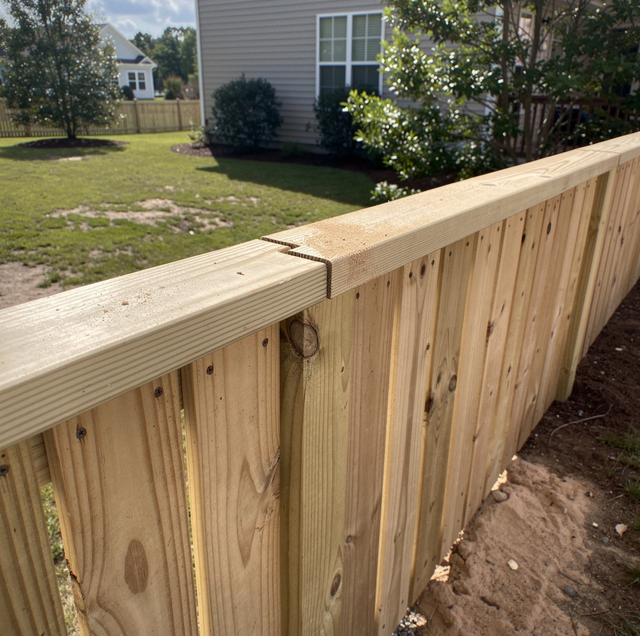
Cap-and-Trim vs Picture-Frame Wood Fence: What the Trim Does
Both styles start from an ordinary wood fence and build on top of it, where a plain run would otherwise leave the cut end grain of every picket top exposed to the weather.
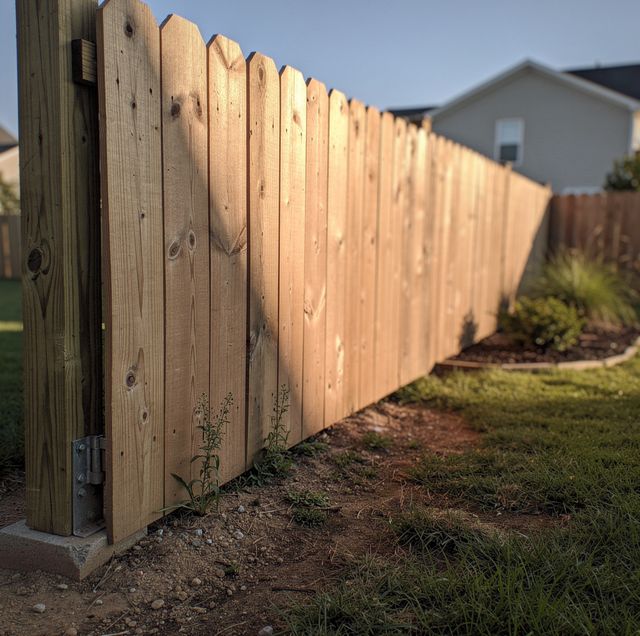
Board-on-Board vs. Shadowbox Fence: How Much Each One Hides
Walk the same fence line straight on and then step off to the side, and a run that looked fully closed from the porch can open into a narrow strip of yard you can see straight through.

Tree Limb Fell on the Fence? Who Goes First and What to Check
You walk out to the back of your yard and find a limb the size of a small tree lying across your fence.
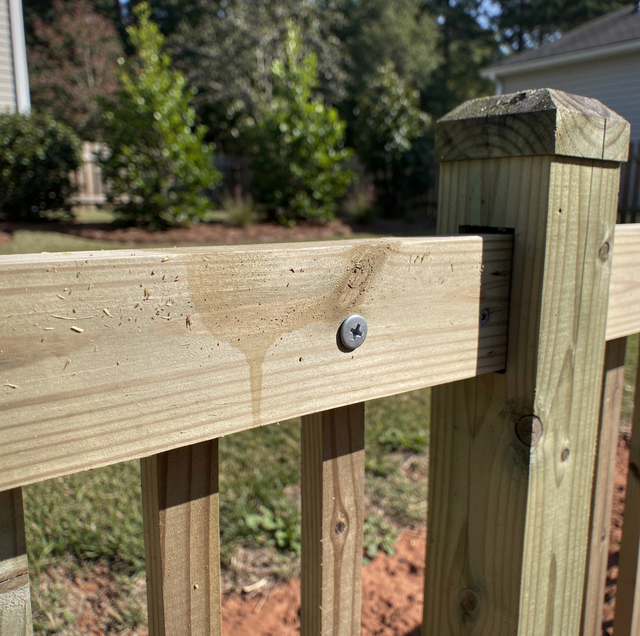
Screwed vs. Nailed Fence Framework: Why Nailed Rails Sag
You have probably heard a nail and a screw do the same job on your fence frame, so whichever one your crew grabs barely matters.
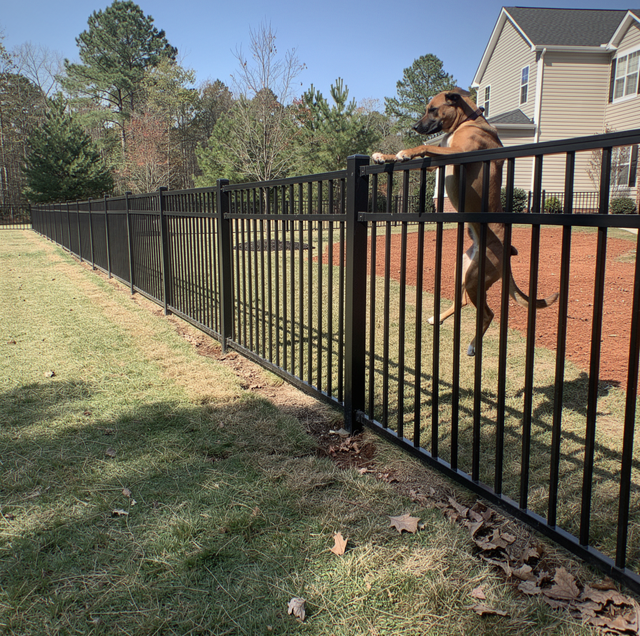
Residential vs. Commercial Aluminum Fence: What Really Changes
Lean your shoulder against an aluminum fence rail, and you can usually feel it give a little before your weight finishes pushing.
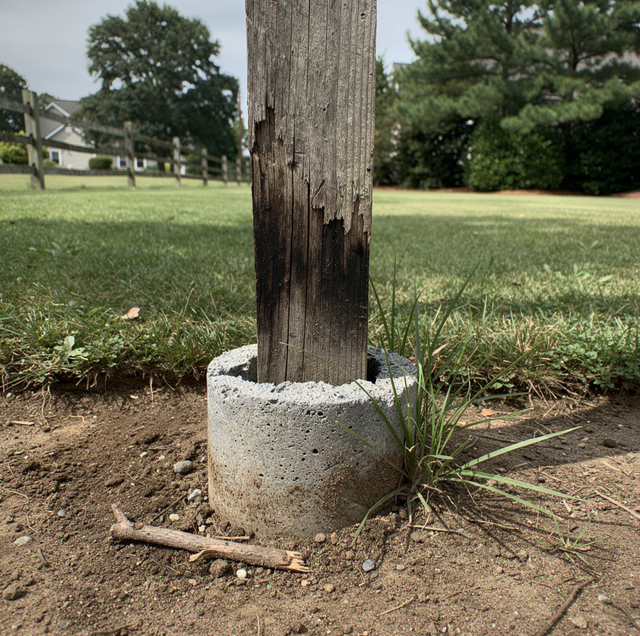
Old Fence Post Concrete Footing Removal: Why It Comes Out First
Concrete around a fence post does not rot, but the wood inside it does. After years in damp soil, your post softens at the ground line and gives way, while the concrete collar around its base stays where it was poured.
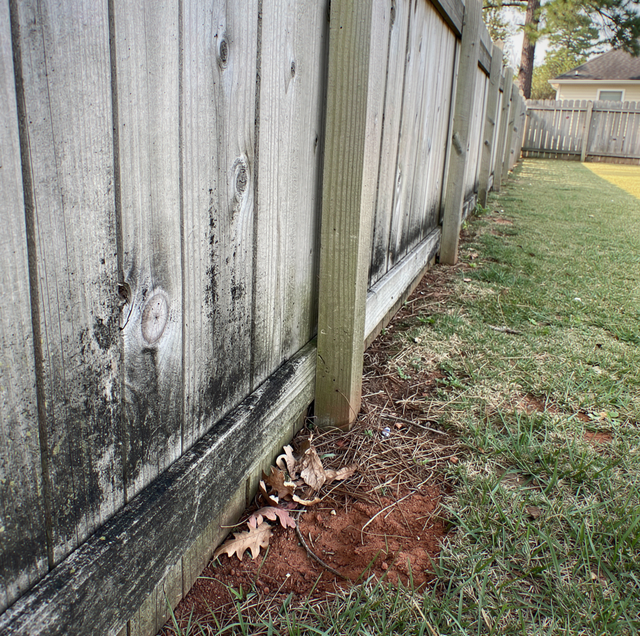
Mildew on Your Fence's Shaded Side: What's Really Growing There
The dark, blotchy staining spreading across your fence's shaded side is not the sun fading your wood the way it fades every other board.

Wood Fence Attached to the House: Fasten It or Stand It Off?
Trouble collects in the last foot of a wood fence run. A board or post meets the siding there, rain running down the wall lands on the joint, and whatever sits against the house holds that water for as long as the two surfaces touch.

Replacing an Apartment Community Fence While Residents Live There
A community property keeps running while its fence comes out: residents are still leaving for work, gates are still opening for foot traffic, dogs are still walked along the perimeter, and cars are still parked against the fence line.

New Subdivision Perimeter Fence: What the Build Date Decides
A perimeter fence is one line on a build-out calendar that can run for months or years, and the date it lands on decides what the fence has to survive.
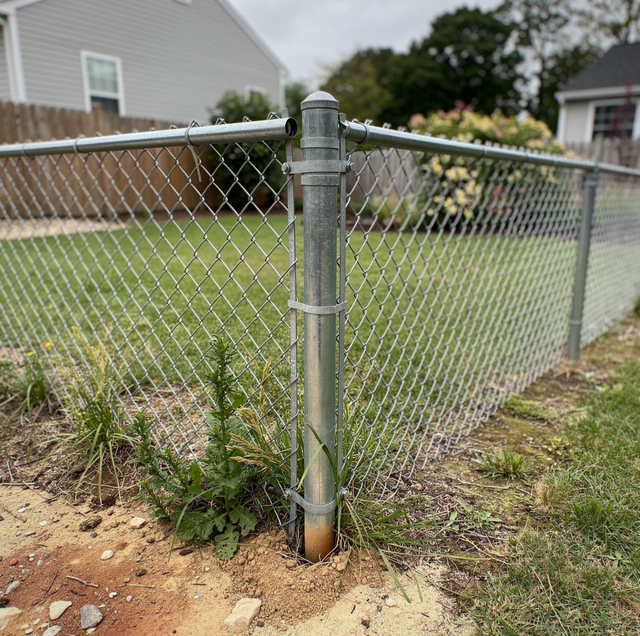
New Chain Link Fabric on Old Posts: What the Frame Must Prove
On a chain link run, the frame decides whether new fabric goes on old posts, and the mesh has little say.

Ivy on a Wood Fence: What the Pulling Takes With It
The vine is already through the boards, and the pull that comes next can hurt the fence as badly as the vine ever did.
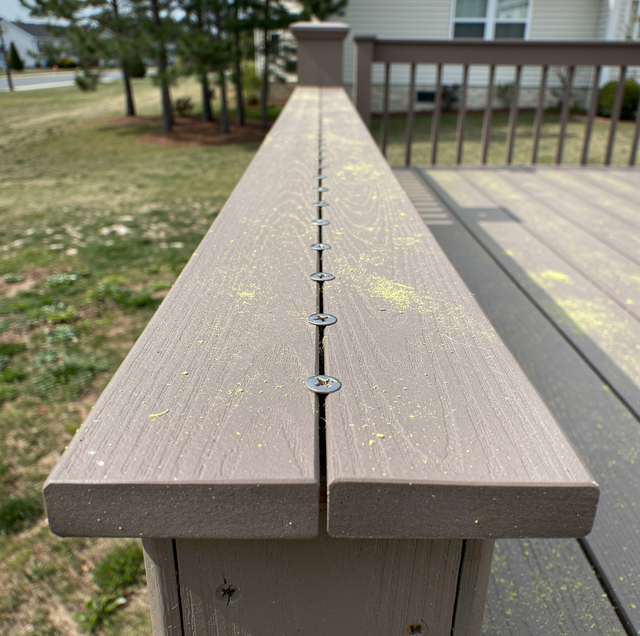
Hidden Fasteners or Face Screws on a Wood Deck: The Trade
Walk a deck barefoot, drag a broom across it, then glance down the length of the boards, and between them the three show how the boards are fastened.

Dog-Ear vs Flat-Top vs Gothic Pickets: How Each Top Sheds Water
The top cut of a picket decides how the board end meets rain. A picket is sawn from a tree trunk, so its length runs along the grain, and the cut across the top opens the ends of the long wood fibers to the weather.
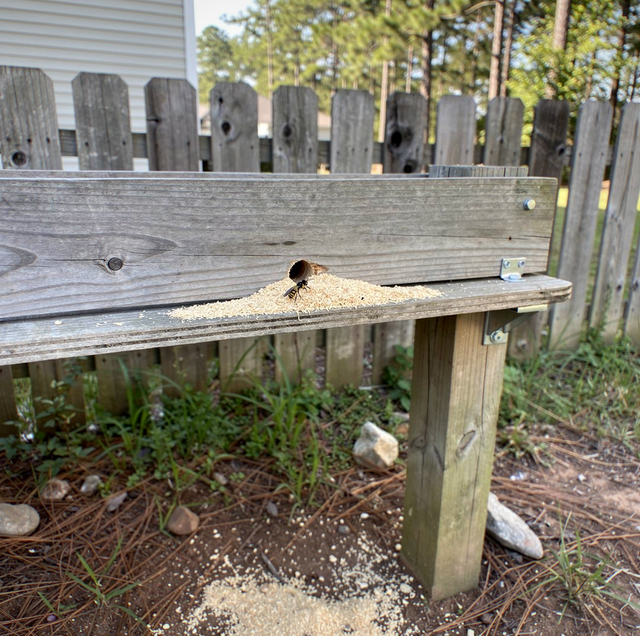
Carpenter Bee Holes in a Wood Fence: Which Rails Can Stay
A perfectly round hole sits on the underside of a rail, about half an inch across, and a small pile of coarse, yellowish sawdust has collected on the ground or on the board below it.

Aluminum vs. Vinyl Picket Fence: Which Suits the Front Yard?
A front-yard fence is visible from the street, the sidewalk, and the porch all day, and its job is to frame the lawn and the walk while keeping the house in view.

Adding a Gate to an Existing Wood Fence: Where the Opening Goes
An opening in an existing wood fence can go in one of two places. It can take out a whole bay, the stretch of rails and boards between two posts already in the ground, or it can land partway along a bay, where the rails get cut and at least one new post goes in to frame the gap.