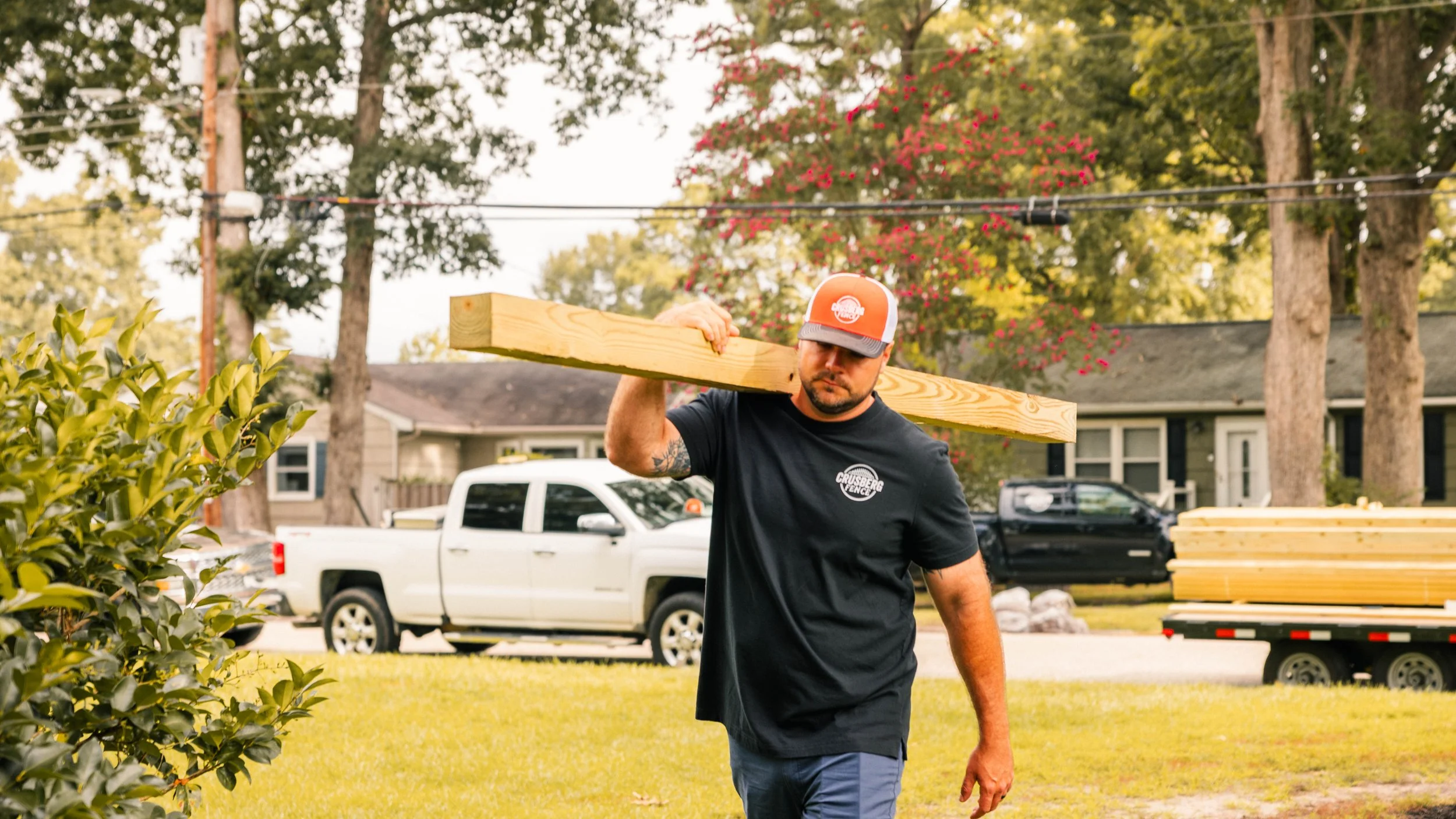
Pool & Safety / Fencing

Pool & Safety Fencing
in Yorktown
& Across the Virginia Peninsula

Virginia code-compliant pool barriers with self-closing, self-latching gates. Aluminum or chain link, built to pass inspection and keep kids safe. Licensed, bonded & insured.

Code-compliant pool safety fence by Crusberg Fence in Yorktown, VA
Aluminum pool fence installed by Crusberg Fence
4.9 ★★★★★70 Google reviews
CODEBuilt to Virginia pool code
SELF-LATCHSelf-closing gates
4.9 ★70 Google reviews
FREEEstimates · 3% military
Code-compliant pool safety fence by Crusberg Fence
Self-latching pool gate latch installed by Crusberg Fence
01

A pool fence has one job that matters more than looks: keeping a small child from reaching the water unsupervised. Virginia requires a compliant barrier around a residential pool, and we build to that code, with the right height, the right picket spacing, and gates that close and latch on their own every single time.

02

Crusberg Fence is a family-owned, Virginia Class A licensed contractor with a 4.9-star average across 70 Google reviews. We install pool fencing in aluminum or chain link, and we have gone back to fix pool barriers that failed inspection and brought them up to code. We build it right the first time.

03

Every estimate is free, and we do not quote a fence sight unseen. Call or text, and a real person comes out, measures, and gives you an honest written price.

Built to Virginia pool-barrier code
Self-closing, self-latching gates
Virginia Class A Contractor · DPOR #2705194192
4.9 ★ across 70 Google reviews
Free estimates · 3% military discount
Why homeowners call

Why Homeowners Call Us for Pool Fencing

Most pool-fence calls come from one of these situations:

Get a Free Estimate
Pool safety fence installed by Crusberg Fence
01

You are putting in a new pool

A new pool install is the most common trigger, and the barrier is part of getting it signed off. We coordinate with your timeline so the fence is up and compliant when you need the pool inspected and open.

02

An inspection or insurance requirement

Sometimes the pool is already there, and a home inspection, an insurer, or the locality flags the barrier. We build or bring the fence up to code so it passes.

03

You are buying or selling a home with a pool

A pool without a compliant barrier can hold up a sale. We assess what is there and what code requires, then install or retrofit the barrier and gates.

04

Kids or grandkids are coming

Sometimes the pool predates the code or the kids, and it is simply time to make the yard safe. A proper barrier with a self-latching gate is the single most important safety step around a home pool.

05

Your gate stopped latching

A self-latching gate that no longer latches is the same as no gate at all. Hinges drift, and latches corrode in coastal air, and we repair or replace the hardware to get the barrier working again.

Pool fence height and gate requirements, Crusberg Fence
Local code

Pool Code on the Peninsula

Virginia sets a residential pool-barrier standard through the building code, and it is enforced at the local level, so York County, Newport News, Hampton, Poquoson, Williamsburg, and the surrounding localities each run their own inspections. The core requirements are consistent, but a specific county can be stricter on a detail like chain link mesh size, so we confirm the local rule before we build.

Two coastal factors shape how we install. First, the water table sits high near the rivers and the bay, so gate posts have to be set properly, or a gate will sag out of latch the first wet season, and a sagging gate is a failed barrier. Second, salt air corrodes cheap latch and hinge hardware, which is why we use reliable, corrosion-resistant gate hardware; a latch that seizes or rusts open is a safety failure, not just a nuisance.

One more local wrinkle: some HOAs cap fence height below what you might otherwise choose, even though pool code sets a minimum. We build to satisfy both, the safety minimum and the neighborhood rule, at once.

Requirements

What a Code-Compliant Pool Barrier Requires

Virginia residential pool-barrier code comes down to a handful of non-negotiables. This is what we build, and we confirm the exact figures with your local building official, since enforcement is local.

01 Barrier height.

A minimum of 48 inches (four feet) measured from the ground on the outside of the fence. Some situations or HOAs call for taller, and we build to whatever the higher requirement is.

02 No gaps a small child can pass through.

Openings in the barrier cannot let a 4-inch sphere pass, which governs picket spacing and any decorative gaps. The gap at the bottom of the fence stays within about 2 inches of the ground.

03 Self-closing, self-latching gates.

Gates must swing closed and latch on their own, with no one pushing or pulling them, and the latch release sits high on the pool side, at least 54 inches up, so a child cannot reach it. Gates open outward, away from the pool.

04 No climbable rails.

Horizontal rails that could act as ladder rungs are kept off the outside face, so the barrier cannot be climbed from the yard side.

05 Aluminum or chain link.

We build pool barriers in ornamental aluminum, the clean and popular choice, or in chain link for a budget-friendly, still code-compliant option. Both meet the standard when built right.

What's NOT included on this page

We build the barrier, not the pool. Pool installation and equipment are not services we offer. Pool code is enforced by your locality, and the final inspection is theirs, not ours. We build to meet local requirements and confirm specifics, but we do not issue approval. We do not install automatic gate operators or alarms. Manual self-closing, self-latching gates only; alarm systems would be a separate specialty.
Pricing

How Pool Fence Pricing Works

Pool-fence pricing follows the same honest rule as the rest of our work: it depends on things we have to see. What drives it:
Pool safety fence gate installed by Crusberg Fence
01 Aluminum versus chain link, and the height required.
02 The length of the barrier and the number of gates.
03 The grade and access around the pool, and digging conditions.
04 Whether an existing fence needs to be brought up to code or removed.

Every price comes after a free on-site measure. A typical deposit is around 20 percent, or closer to 50 percent for special-order materials, with the balance due on completion. We honor the written quote, add no surprise charges, and offer a 3 percent military discount.

Step by step

What Happens, Step by Step

Phase 01 / Steps 1-4Getting your price
01 Same-day response.

Call or text, and you reach someone from the crew directly.

02 Free on-site measure.

We measure the enclosure, look at the grade and access, and note where gates need to go.

03 Confirm the local code.

We confirm your locality's exact requirements, which vary by county.

04 Layout and material.

We lay out a barrier that fully encloses the pool and choose aluminum or chain link with you, at a compliant height.

Phase 02 / Steps 5-8Install and pass inspection
05 Written estimate, deposit, and scheduling.

You get an itemized price; with a deposit, we schedule you, usually three to four weeks out.

06 Install.

We set gate and line posts properly for coastal soil, build to the required height and spacing, and keep climbable rails off the outside face.

07 Gate hardware.

We hang self-closing hinges and a self-latching latch set high on the pool side, using corrosion-resistant hardware.

08 Final check and walk-through.

We check that the gate closes and latches on its own from any position and walk the finished barrier with you before your inspection.

Why Crusberg Fence

Why Crusberg Fence for Pool Fencing?

01

We build to pass

Height, the 4-inch spacing rule, the bottom gap, self-closing and self-latching gates, and no climbable rails: we build the barrier to the Virginia standard so it clears inspection.

02

Gate hardware that keeps working

The gate is where pool barriers fail, so we use reliable self-closing hinges and self-latching hardware and set the posts properly so the gate does not sag out of latch. In salt air, cheap hardware seizes or rusts, and we spec against that.

03

We fix barriers that will not pass

We have been called back to fix a pool barrier that would not pass, corrected it efficiently, and saved the homeowner money doing it. Getting it right the first time is cheaper than getting it inspected twice.

04

Aluminum or chain link, honestly

Aluminum is the clean, popular choice; chain link is the budget option and still fully compliant when built right. We tell you the real trade-off instead of steering you to the pricier material.

05

Virginia Class A licensed, bonded, and insured

We hold a Virginia Class A contractor license (DPOR #2705194192) and carry liability, workers' compensation, and commercial auto coverage. Safety-critical work should be done by an accountable, licensed contractor.

06

A 4.9-star, family-run reputation

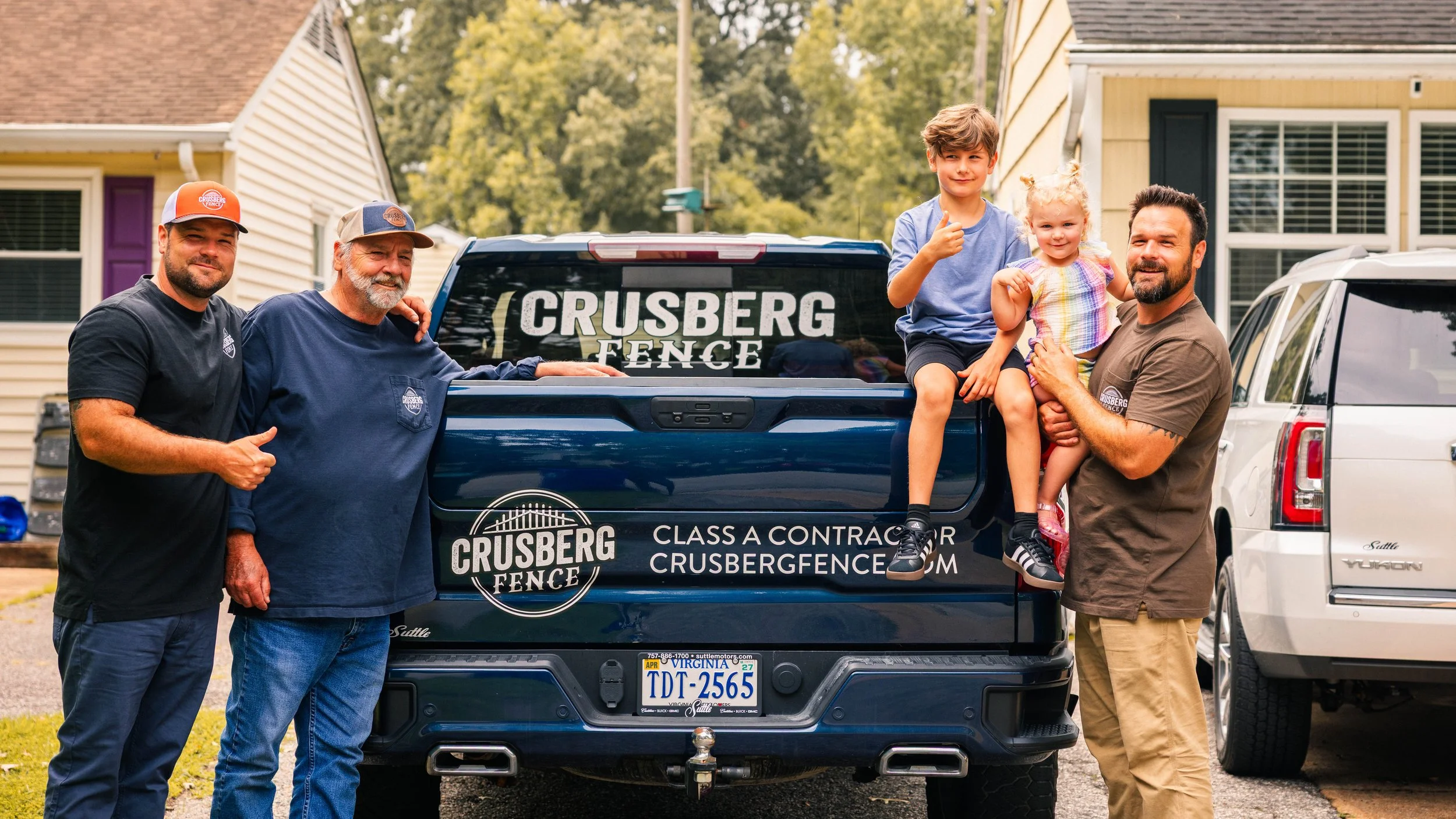
Keith started in the trade more than 40 years ago; his twin sons Clint and Cole run it today, and one of them is on your job. We hold a 4.9-star average across 70 Google reviews.

The detail that matters

What Actually Makes a Pool Fence Pass, and the Hardware That Fails First

If you are putting a barrier around a pool, this is the part worth understanding, because the fence and the gate are held to different standards and the gate is where almost every failure happens.

The fence itself is straightforward. Keep the barrier at least four feet tall measured from the outside grade, keep every opening too small for a 4-inch sphere so a small child cannot squeeze through, hold the bottom gap to about 2 inches, and keep climbable horizontal rails off the yard-side face so the fence cannot be used as a ladder. Get those right, and the barrier passes.

The gate is the hard part, and it is where inspectors fail and, far more importantly, where real accidents happen. Code requires the gate to be self-closing, meaning it swings shut on its own from any open position, and self-latching, meaning the latch engages by itself when it shuts, with the release set high on the pool side, at least 54 inches up, and out of a child's reach. The most common real-world failures are simple: a gate propped open with a brick, a latch that a homeowner mounted at a convenient waist height instead of up high, or a self-closing hinge and latch that corroded in salt air until the gate no longer swings shut and catches. A self-latching gate that no longer latches is exactly the same as no gate at all. That is why we set the gate posts to stay true, mount the hardware at the compliant height, use corrosion-resistant parts, and check that the gate closes and latches on its own before we leave, and why we tell every pool customer the same thing: never prop the gate open, and check twice a year that it still latches on its own.
Self-latching pool gate latch installed by Crusberg Fence
Reviews

Real Pool and Safety Jobs

A few relevant jobs our neighbors have shared on Google. Read more on our reviews page.

HFrom a verified Google review · Homeowner review, December 2023 · pool fence move and inspection fix ★★★★★

Crusberg moved a very large pool fence for me and did such a great job you cannot even tell where the fence was before. They filled every hole and left everything pristine. When I had trouble with a fence inspection, Keith and his team came to my home twice to evaluate and fix it, did it perfectly and efficiently, and saved me a lot of money.

EFrom a verified Google review · Erica R., March 2026 · repair and new gate ★★★★★

Came and gave me an estimate immediately for my repair and new gate, and had it done within a week. Excellent communication.

SFrom a verified Google review · Stephanie M., June 2026 · on time, exactly as promised ★★★★★

From the initial estimate to the final installation, the team was professional and courteous. They showed up on time, communicated clearly throughout, and completed the job exactly as promised. The attention to detail really shows.

Materials

Aluminum vs. Chain Link for a Pool

Ornamental aluminum

Our most popular pool material. It looks like landscaping rather than a safety cage, never rusts in salt air, and takes clean self-latching gate hardware. The higher up-front cost buys the best look and the least maintenance.

Chain link

The budget option, and fully code-compliant when built right, with the correct mesh size, height, and a self-closing, self-latching gate. Black vinyl-coated chain link softens the industrial look if you want something between price and appearance.

Gate hardware

Whichever material you choose, the barrier is only as good as the gate. We use reliable self-closing hinges and a self-latching latch set high on the pool side, in corrosion-resistant hardware built for the coast.

FAQ

Pool Fence FAQs

01 Is a pool fence required in Virginia? +
Yes. Virginia's building code requires a compliant barrier around a residential pool, enforced by your local building department. We build to that standard.
02 How tall does a pool fence have to be? +
At least 48 inches, or four feet, measured from the ground on the outside of the barrier. Some situations or HOAs require taller, and we build to whichever is higher.
03 What are the gate requirements? +
Gates must be self-closing and self-latching, swing outward away from the pool, and have the latch release set at least 54 inches up on the pool side, out of a child's reach. The gate has to close and latch on its own every time.
04 Do I really need self-closing hinges if I keep the gate locked? +
Yes. Code requires the gate to be self-closing and self-latching, not just lockable, because the danger is the one time it is left open. A gate that depends on someone remembering to lock it is exactly the gate that fails when it matters, so we build to the self-closing, self-latching standard.
05 How small do the gaps have to be? +
No opening can let a 4-inch sphere pass, which sets the picket spacing, and the gap at the bottom stays within about 2 inches of the ground. That keeps a small child from squeezing through or under.
06 Aluminum, chain link, or mesh- which is best? +
Aluminum is the cleanest, lowest-maintenance, and most popular. Chain link is budget-friendly and still compliant when built right. We install aluminum and chain link; we will give you the honest trade-off for your yard and budget.
07 What gate latch do you use? +
A reliable self-latching latch set high on the pool side, in corrosion-resistant hardware so it does not seize or rust in salt air. Cheap latches are where barriers fail.
08 Can the house count as one side of the barrier? +
Rules on using a wall of the house as one side are strict and vary by locality, and they usually require added measures like alarmed doors. A true four-sided fence around the pool is the simplest way to be safe and compliant. We will confirm what your locality allows.
09 My pool fence failed inspection. Can you fix it? +
Yes. We are sometimes called to correct a barrier that will not pass, whether it is gate hardware, spacing, or height, and bring it up to code efficiently.
10 Do you install the pool too? +
No. We build the barrier, not the pool. We are glad to coordinate with your pool builder's timeline so the fence is ready when you need it.
11 Why won't you quote a price over the phone? +
Because it depends on material, height, length, gates, and access. We measure in person and give you a free written estimate rather than a phone guess.
Service coverage

Where We Build

Crusberg Fence installs pool and safety fencing across the Virginia Peninsula and greater Hampton Roads, based in Yorktown.

Primary markets:Yorktown, Tabb, Newport News, Hampton, Poquoson, and Williamsburg.

Also serving:Gloucester, Seaford, Grafton, Denbigh, Carrollton, Smithfield, and surrounding communities.

Not sure if we reach your neighborhood? Call or text, and we will tell you straight. See our full service area for the complete list.

Call or text Clint (757) 508-1782
Call or text Cole (757) 508-0538
Free estimate

Get Your Free Pool Fence Estimate

Tell us about your pool, and we will come measure, confirm what your locality requires, and give you a free written estimate for a barrier that passes.

Call or text: (757) 508-1782 or (757) 508-0538 · Mon–Sat 8:00 AM to 5:00 PM · Yorktown, VA