Pool and Safety Fencing/Chesapeake

Pool and Safety Fencing in Chesapeake, VA

Pool barriers with self-closing, self-latching gates across Chesapeake | Built by an owner-run, Class A licensed crew, measured from the side that counts

A pool barrier must reach 48 inches, and the height is measured on the side facing away from the water. On Chesapeake's made ground, those numbers are routinely different.
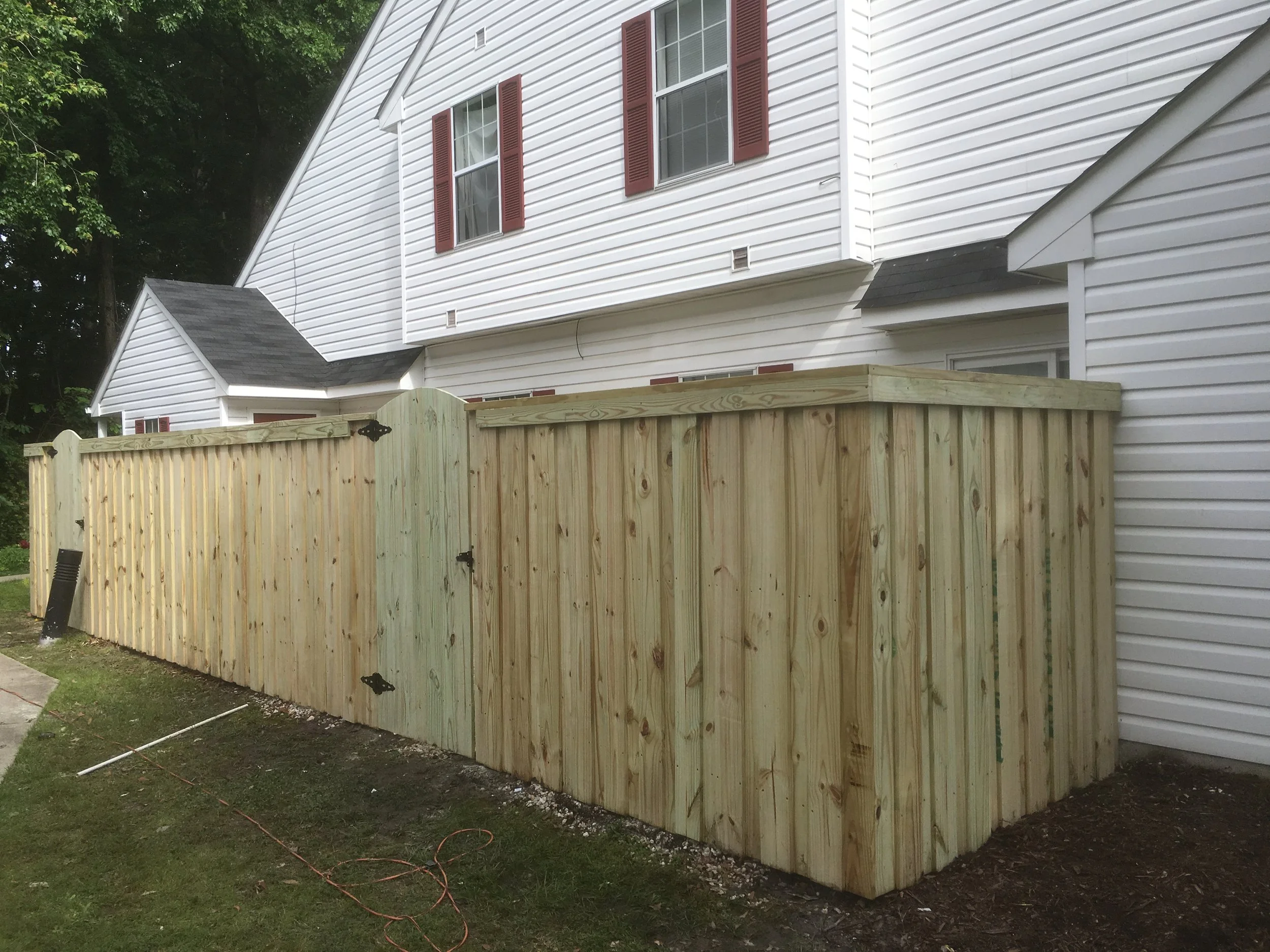
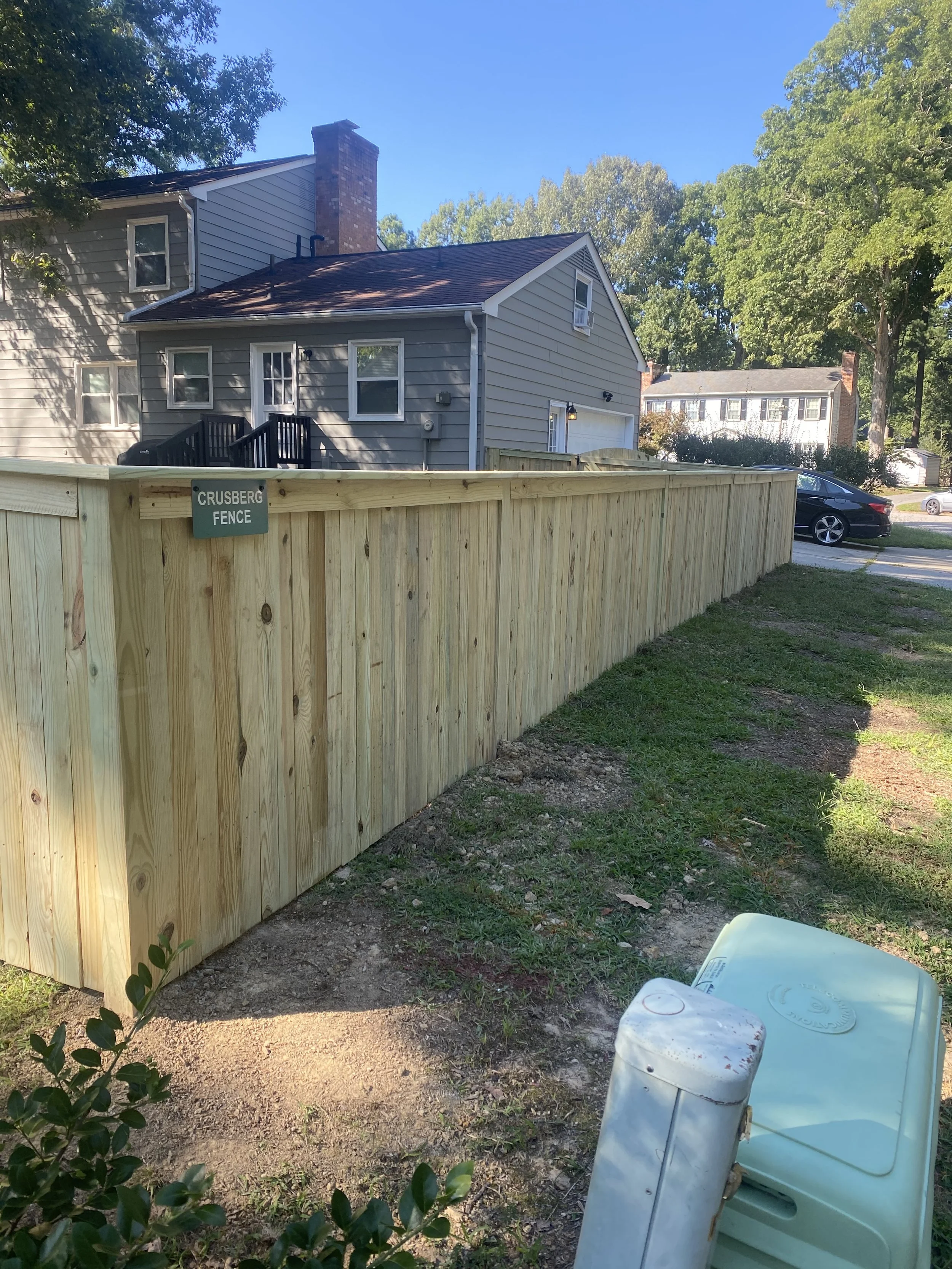
Board-on-board wood fence with screwed framework by Crusberg Fence
Wood fence built for coastal Virginia Peninsula conditions by Crusberg Fence
4.9★★★★★70 Google reviews
40+ YRSCombined experience
CLASS ADPOR #2705194192
2 FT DEEPPosts set in concrete
4.9 ★70 Google reviews
Board-on-board wood fence with screwed framework by Crusberg Fence
The detail

Measured From the Outside, and Why That Is Not Pedantry

The barrier standard sets a minimum height of 48 inches above grade and requires it to be marked on the side of the barrier facing away from the pool. That is how the barrier standard is written, and the locality applies it. What is particular to Chesapeake is how often those two numbers are on the same fence.

On level ground, the distinction is academic. It stops being academic on filled and graded ground, and a great deal of residential Chesapeake is exactly that: lots raised out of low ground, yards falling away to a drainage ditch, pool decks built up above the run of the garden. Where the ground outside the fence sits lower than the ground inside it, a barrier can measure comfortably over forty-eight inches from the pool deck and fall short from the yard, which is the side that counts.

The reason it is written that way is the reason the barrier exists: the standard is concerned with a child on the outside getting in, so the height that matters is the height they would be climbing. Anything else is measuring the wrong problem.

What that means in practice is that we walk the outside of a proposed barrier line and take levels along it before anything is quoted, particularly where a pool deck has been raised, or a yard falls away toward a ditch. The low point on the outside face is the number the barrier has to satisfy.

What we cover

The Rest of What Makes a Barrier a Barrier

01

Gates

Self-closing and self-latching per Virginia pool code. Hardware is a common reason an existing barrier does not pass.

02

Openings and clearance

Openings, mesh size, and the clearance at the bottom of the barrier each carry their own requirement. Our pool fencing page sets those out in full.

The process

How a Chesapeake Pool Barrier Job Runs

01

Walk the outside line and take levels, particularly where a deck is raised, or the yard falls away.

02

Establish the permit route. A fence serving as a pool barrier in Chesapeake goes through building-permit review, a different process from an ordinary yard fence. The city confirms which route your job takes.

03

Written estimate with the governing height, the gate specification and the measured low point on it.

04

You file; we supply the barrier dimensions, the gate detail and the site plan.

What we cover

The Barriers We Are Called Back To

Most of what we are called out to in Chesapeake is a fence somebody already owns that now has to do a second job, or one that has come back from an inspection with a note on it. The same few patterns keep turning up.

01

The barrier that was measured from the deck

The commonest one we are called back to. Somebody stood on the pool deck with a tape, read the height off that side, and the yard behind it sits eight or ten inches lower. The barrier was never short to the person who built it.

02

The gate that stopped self-closing

Self-closing hardware is mechanical and lives outdoors in humid, salt-laden air. A hinge that has stiffened or a latch that no longer catches on the first swing is what an inspection will look for, even when every panel is perfect.

03

Something left leaning against it

A condenser unit, a stack of pavers, a trash can, or a trampoline moved against the fence changes what the outside face offers a climber, and none of it is structural, so none of it shows on a drawing. It is worth walking that side before the inspector does.

04

A gap that opened at the bottom

Ground settles, particularly on filled lots, and a clearance that was compliant at install can open up underneath a run over a couple of wet seasons.

Why us

What You Get on a Chesapeake Barrier Job

Levels taken on the outside face, not from the pool deck.

Self-closing, self-latching gates built to Virginia pool code.

Hardware specified to keep working in humid, salt-carrying air.

Owner-run, by people who have seen what an inspection actually looks at.

Class A licensed in Virginia, DPOR #2705194192, fully insured including commercial auto.

FAQ

Pool Barrier Questions, Chesapeake Specifics

01Where exactly is the forty-eight inches measured?+
On the side of the barrier facing away from the pool, above grade. On a level yard, the two readings are the same number. On a raised deck or a yard that falls away, it is the whole question.
02My deck is higher than the yard. Is that a problem?+
It is the common Chesapeake version of this problem, and it is often workable when it is designed for at the start. The barrier has to meet the height requirement on the low side, which can mean a taller run than the one you pictured from the pool deck.
03Does a pool fence go through the same permit as any other fence?+
No. A fence serving as a pool or spa barrier goes through Chesapeake's building-permit route instead. It is worth knowing because it is a different application and a different timeline.
04We keep the gate shut. Do we still need self-closing hardware?+
Yes. Pool gates are built self-closing and self-latching to Virginia pool code. A barrier that works only when somebody remembers is not what the standard describes.
05Can our existing fence become the barrier?+
Sometimes. Four things get measured: how tall it reads from the outside, what the gap at the bottom is, how wide the openings are, and what the gate does when you let go of it. A fence built to keep a dog in often meets some of those and not others. Have it measured before you assume either way.
06Do you put the pool in as well?+
No, we build the barrier and the gates. It generally goes more smoothly when we are talking to whoever is installing the pool.
Still have a question?

Call or text and we will answer it straight, no pressure.

Get a Free Estimate

Call or text (757) 508-0538 or (757) 508-1782

Recent work

Barriers We Have Built and Corrected in Chesapeake
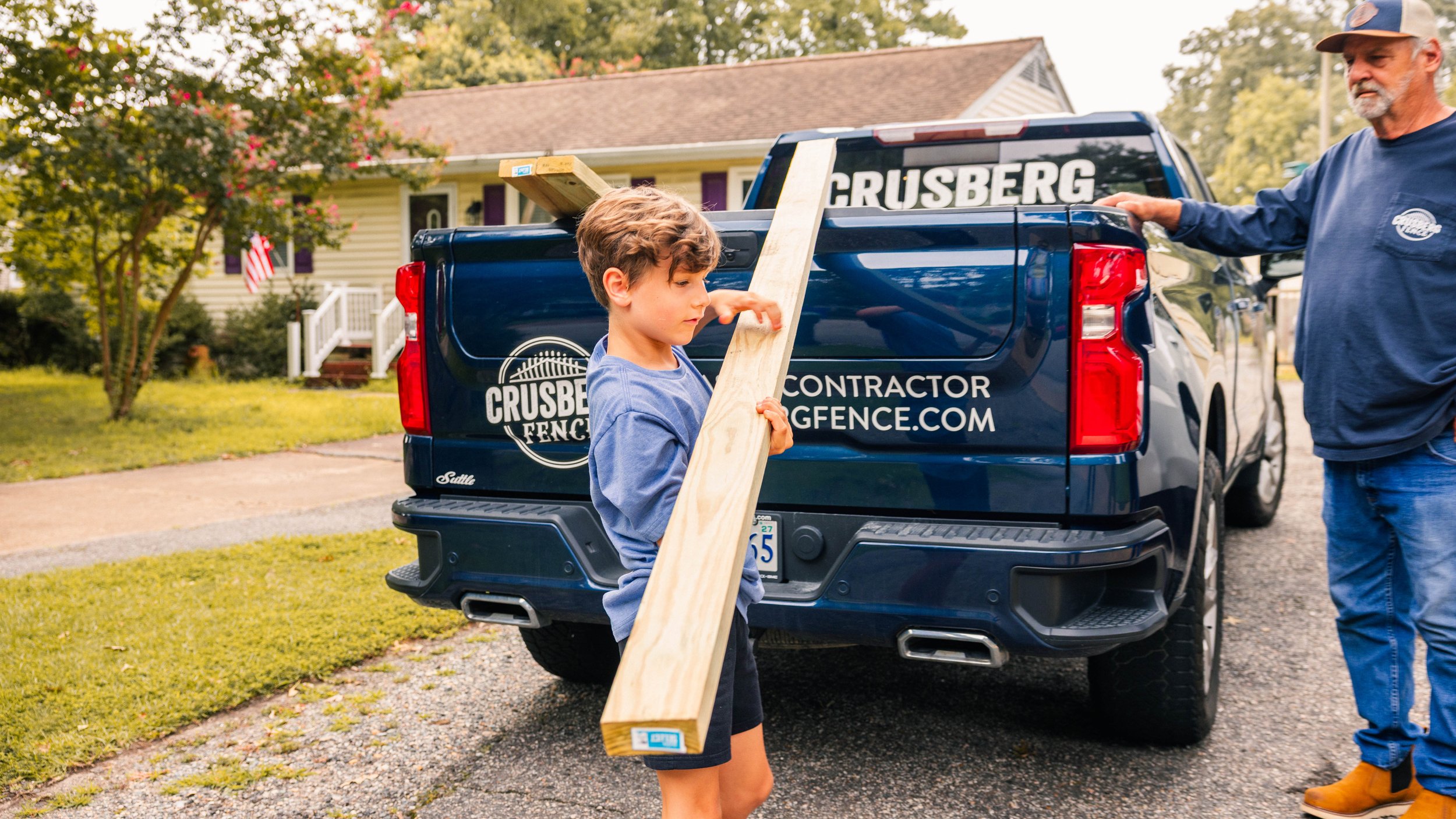
Clint Crusberg carrying fence lumber on a job site
Wood fence post set two feet deep in concrete by Crusberg Fence
Screwed rail and gate framework by Crusberg Fence
Custom wood privacy fence built by Crusberg Fence
Crusberg Fence crew on a job site
Board-on-board wood privacy fence built by Crusberg Fence in York County, VA
Service coverage

Pool Work Across the City

New pools and barriers that have to be brought up to standard. Street not listed? Ask.

Reviews

What Chesapeake Customers Say

Free estimate

Get a Barrier Estimate

Call or text (757) 508-1782 for a free, on-site, written estimate on a pool barrier anywhere in Chesapeake.

Call or text: (757) 508-0538 or (757) 508-1782 · Mon–Sat 8:00 AM to 5:00 PM · Yorktown, VA