Ornamental Aluminum Fences in Chesapeake, VA
Powder-coated aluminum around pools, view lines, and corner lots across Chesapeake | Owner-run, Class A licensed, and clear about what the city will ask for
On a Chesapeake corner lot, a fence above four feet in the second street-facing yard can bring a landscaped buffer with it. What determines it is how far back you set the line, and there is a distance at which the buffer is no longer required.
The Setback That Decides Whether You Plant Anything
A fence taller than four feet in the second street-facing yard of a corner lot can require a landscaped buffer between the fence and the road. What triggers it is not the height itself. It is the setback band: a buffer yard applies where the fence sits at least ten feet from the property line but less than fifteen. Set it back fifteen feet or more and no buffer yard is required.
That is the single most useful thing to know before anything is drawn, because it turns a planting obligation into a question about where the line goes. On a deep corner lot, the five extra feet are often available at no extra cost. On a shallow one, they are not, and then the buffer is real and worth understanding.
It sounds like a few shrubs. The permit application is more specific than that, and there are two versions.
Buffer Yard A is a ten-foot strip carrying twenty-five shrubs per hundred linear feet. Buffer Yard B is a ten-foot strip carrying three large trees and ten shrubs per hundred linear feet, and two small trees may be substituted for one required large tree.
Put a hundred and fifty feet of corner frontage against those numbers, and the difference between the two becomes a real decision: roughly thirty-eight shrubs under A, against four or five large trees and fifteen shrubs under B. Buffer Yard B involves larger stock and more access planning than Buffer Yard A, and it wants to coordinate with the posts' destination.
This is where aluminum works well on a corner. A buffer yard sits between the fence and the road, so whatever you plant is what the street sees first, and the fence reads through it. An open picket line and a planted buffer work together, each reading through the other.
The Rest of the Corner-Lot Conditions
Above four feet in the secondary front yard, a corner-lot fence sets back at least ten feet. At fifteen feet or more, the buffer yard requirement falls away.
Six feet is the ceiling once you are above four.
The finished side has to face the street.
The buffer comes up as part of the fence approval, so the setback and the planting are one decision, not two.
A through lot is treated differently: the equivalent setback there is five feet, and that is worth establishing before anything is drawn.
Where Aluminum Goes in Chesapeake
How an Aluminum Job Runs in Chesapeake
Establish the lot type first. Corner, through, or interior changes the setback and whether a buffer attaches at all.
Measure the frontage, because the buffer is specified per hundred linear feet and the number only means something once the run is measured.
Written estimate with the panel style, grade, gate hardware, and the governing setbacks on it.
You file the fence permit; we supply the survey markup, the fence dimensions and the buffer detail the application asks for.
Virginia 811, then posts two feet deep in concrete, then panels and gates.
Aluminum on Chesapeake's Ground and Air
The material argument for aluminum here is straightforward. Aluminum does not rust. In a city threaded with canals, rivers, and the Dismal Swamp, where the air carries moisture most of the year and salt for part of it, which removes rust as a failure mode.
What can still fail is everything attached to it. Hinges, latches, self-closing mechanisms, and fasteners are where corrosion first appears, and on a pool gate, they are also the parts that must keep working to a standard. We specify hardware to survive that air, and we will walk you through why that line is on your estimate.
The ground is the other half. Chesapeake's water table sits high, and the soil holds moisture, and an aluminum panel system is rigid: it has very little tolerance for a post that has moved. Posts go two feet into concrete, and the concrete is allowed to cure before panels are hung, which on a wet lot is the difference between a line that stays true and one that reports every fraction of an inch of settlement.
What You Get on a Chesapeake Aluminum Job
We work out whether a buffer yard attaches before you fall in love with a height.
Posts two feet deep in concrete, framework and gates screwed instead of nailed.
An owner on the job, from the estimate to the final walkthrough.
Class A licensed in Virginia, DPOR #2705194192, fully insured including commercial auto.
Aluminum Questions, Chesapeake Specifics
Call or text and we will answer it straight, no pressure.
Get a Free EstimateCall or text (757) 508-0538 or (757) 508-1782
Aluminum We Have Installed in Chesapeake
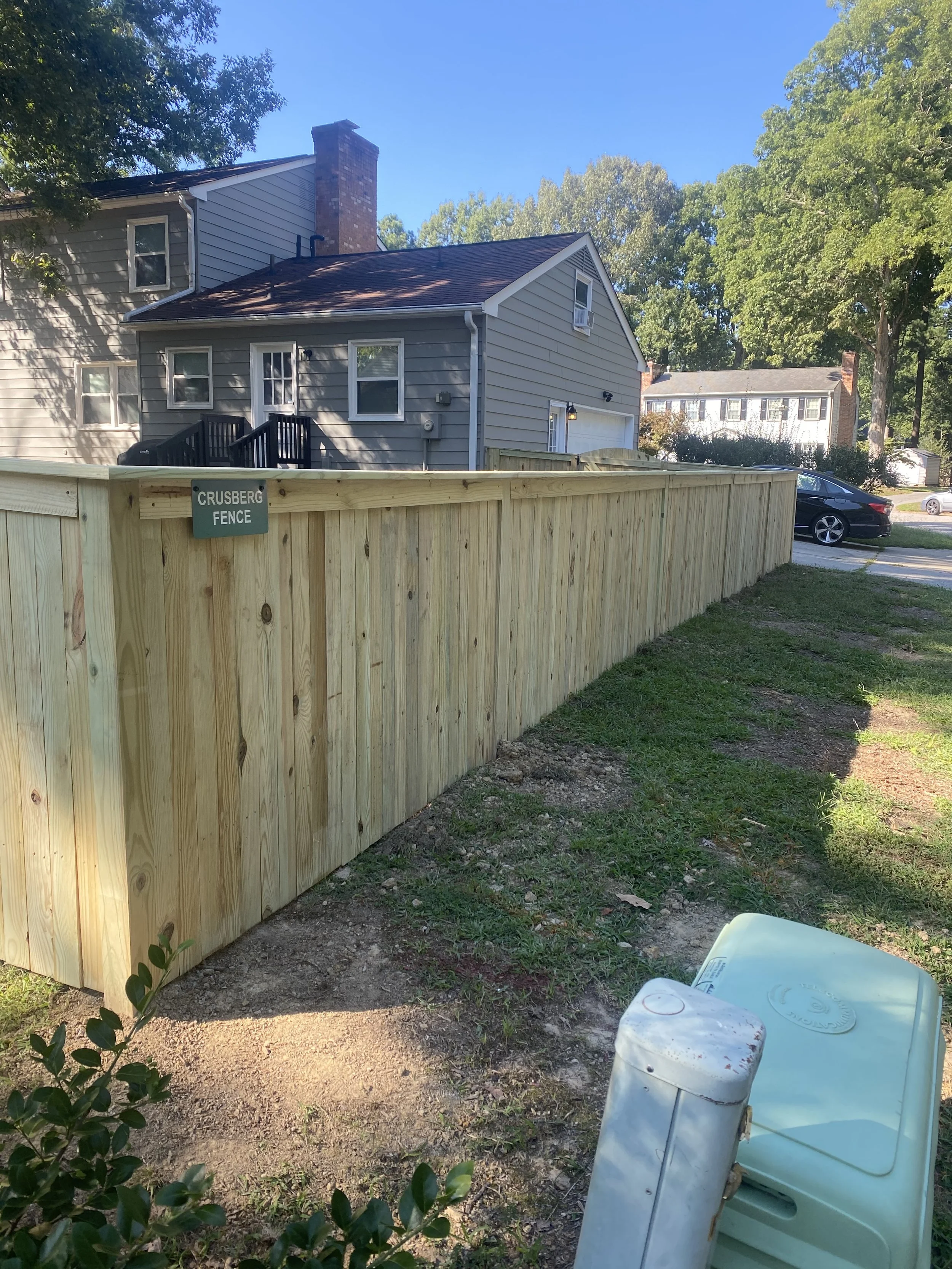
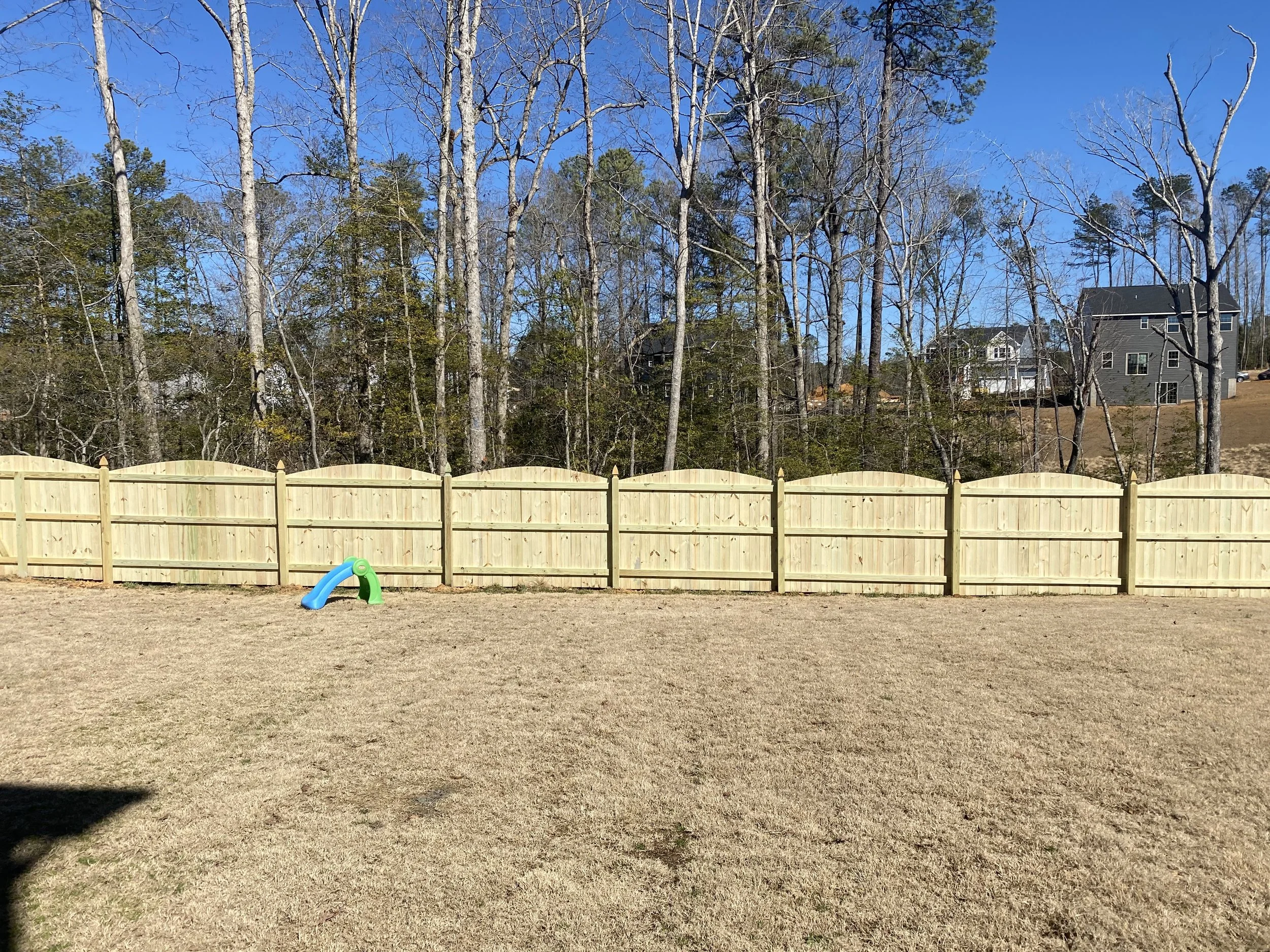
Aluminum Across Chesapeake
Corner lots, pool surrounds, and waterfront run across the city. Street not listed? Ask.
What Chesapeake Customers Say
Book an Aluminum Estimate
Call or text (757) 508-1782 for a free, on-site, written estimate on ornamental aluminum anywhere in Chesapeake.